
How to remove red wine and fruit juice stains
Updated · By the Luniva team
Quick answer
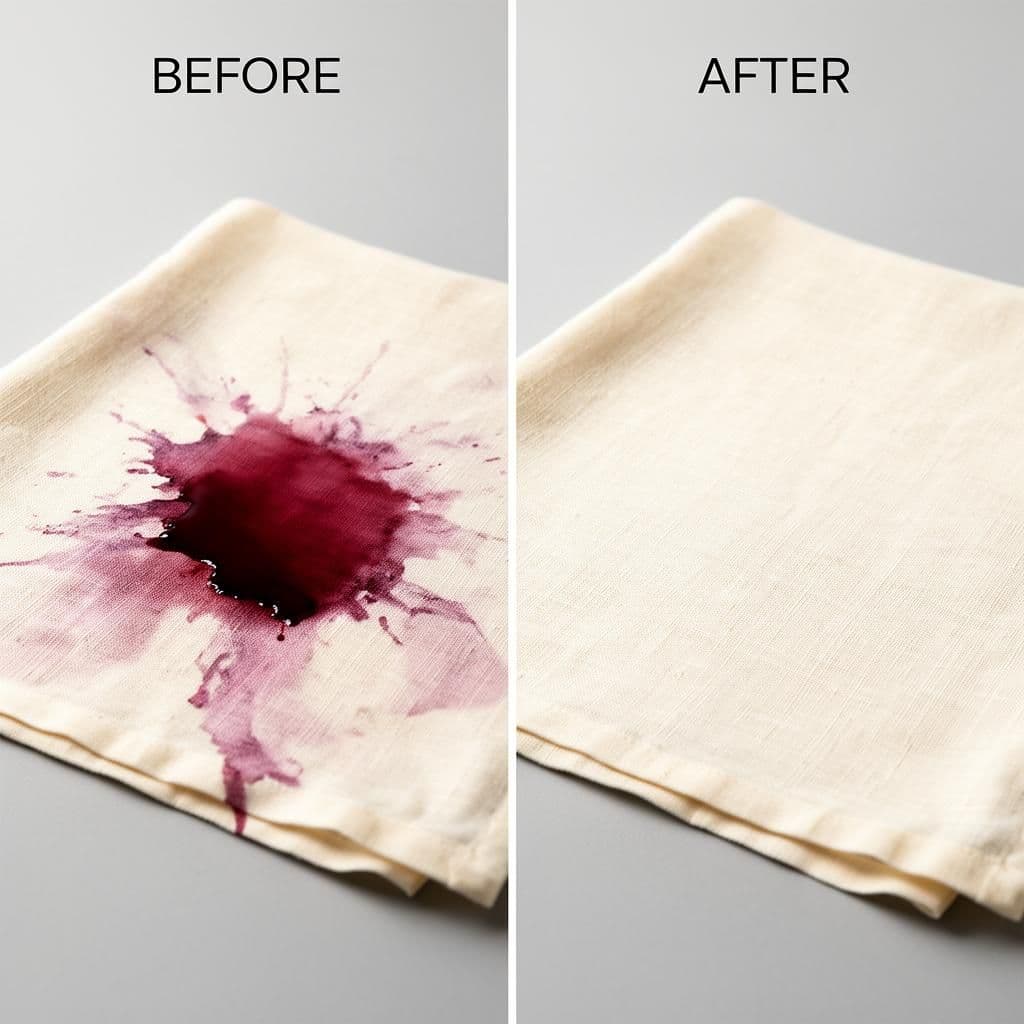
Use Luniva Enzyme Powered (the pink one). Spray it directly onto the stain, leave it for 1–3 minutes, then wash as normal following the garment care label.
Treat wine and juice as soon as you can. Check before drying: heat can set a pink shadow.
Step by step
- 1
Blot – don't rub
Press a clean white cloth onto the stain to lift as much wine as possible. Rubbing spreads the pigment.
- 2
Spray Luniva
Saturate the stain. For dried wine, work the spray in gently with your fingers and leave 1–3 minutes.
- 3
Wash as normal
Machine-wash and air-dry first. Inspect before tumble-drying.
Red wine stains are a race against time. The tannins and anthocyanin pigment bond to fabric within minutes, and the alcohol carries the colour deep into the weave. Luniva's active enzyme + surfactant blend lifts both the pigment and the tannin in 1–3 minutes – without the salt, soda or boiling water of folk-remedy fame.
Why wine bonds so fast
Anthocyanin (the red pigment in wine) is a polyphenol that chemically bonds with cellulose fibres. Tannins reinforce the bond. Once dry, the stain is structurally part of the fabric. Active Enzymes break the polyphenol chain so the colour rinses out.
Fabric guide
Best on washable everyday fabrics
Cotton, linen, denim, polyester and cotton blends: clothes, kidswear, bedding, towels and washable covers.
Test first on delicates
Patch-test an inconspicuous area on silk, wool, viscose, leather-trimmed items or anything labelled dry-clean only.
Don't let it dry
Spray, leave 1–3 minutes, then wash. Don't let the treated area dry out before washing.
Check before drying
Inspect the area after washing and repeat if any shadow remains. Dryer heat can set a leftover mark.
Red wine & fruit juice: questions
Yes. Saturate the stain, leave for 1–3 minutes, then wash as normal, following the garment care label. Repeat once if any pink shadow remains. Don't tumble-dry between treatments.
No. Salt and soda only absorb fresh liquid; they do nothing for the bonded pigment. An active enzyme stain remover is needed to break the polyphenol chain.
No – Luniva is active enzyme-based and bleach-free. It targets the wine, not the dye.
40°C maximum. Boiling water sets tannin into cotton permanently.
Yes – even fruit stains that have already been through a wash and reappeared as a brown shadow. Spray Luniva directly on the dried mark, leave for 1–3 minutes, then wash as normal, following the garment care label. For very old stains on white cotton, repeat the pre-treatment a second time before the wash.
Because detergent alone lifts the surface colour but leaves the bonded anthocyanin pigment behind. As the fibre dries and oxidises, the residual pigment darkens into a faint pink or brown ring. An enzyme + surfactant pre-treatment like Luniva breaks the anthocyanin off the cellulose rather than just rinsing it, so the stain does not return.
Based on controlled laboratory testing. Performance may vary by stain type, fabric, age of the stain and wash conditions. Always follow the garment care label and test an inconspicuous area first.