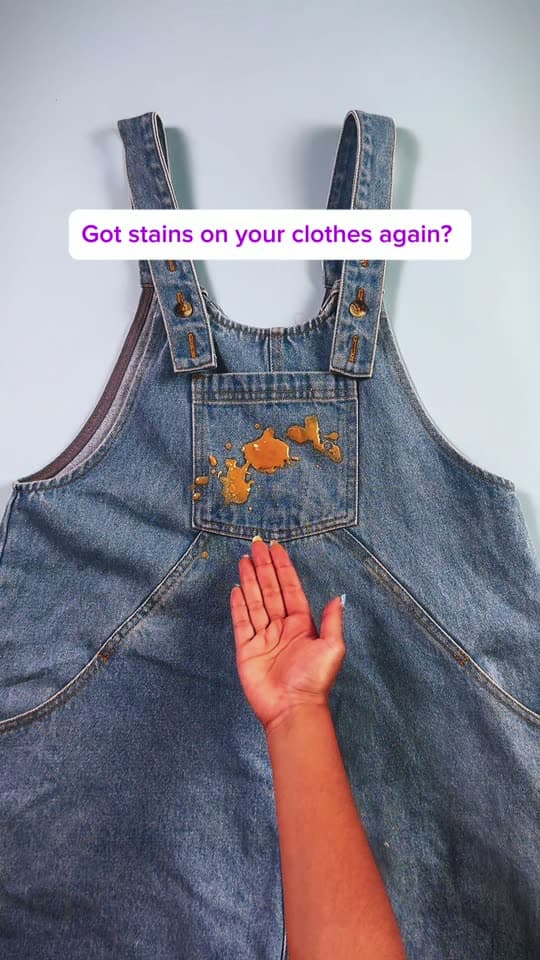
Why cotton stains so easily
Cotton fibres are made of plant cellulose, which loves water. That's what makes cotton comfortable and breathable, and it's also why coffee, wine and sauce disappear into it in seconds. The faster you get to a cotton stain, the less of it soaks in.
Which bottle
Food, drink, blood, sweat, grass and mud
Use Enzyme Powered.
See Enzyme PoweredCooking oil, grease, makeup, suncream and collar grime
Use Pro Formula.
See Pro Formula
The method for cotton
- 1Blot, then rinse cold from the backSoak up what you can with a clean cloth, then run cold water through the back of the stain. Skip the rinse for oily stains.
- 2Spray and wait 1–3 minutesSpray the right bottle until the stain is wet through. Don't rub, and don't let it dry.
- 3Wash at the label temperatureMost cotton can go at 30–40°C, and whites often higher: follow the care label. Air-dry and check before tumble drying.
Hot or cold water?
Cold for the first rinse, always. Heat sets protein stains like blood, egg and milk into cotton. Once the stain is treated, wash at the temperature on the care label. Cotton can shrink in a hot wash or dryer, so check the label before turning the heat up.
Top tips
- Cotton sheets and tea towels can usually take a warmer wash than clothes: check the label.
- Don't tumble dry until the stain has gone.
- Rubbing roughens cotton and spreads the stain. Blot instead.
Questions
Yes. Both sprays are made for washable everyday fabrics, including cotton, polyester, blends, denim and linen.
Spray the matching bottle until the stain is wet through, wait 1–3 minutes and wash. Stains that have been washed and dried may need a second treatment rather than a longer one.
The spray is used before a normal wash, so shrinking depends on the wash and dryer temperature. Follow the care label.