
How to remove coffee and tea stains
Updated · By the Luniva team
Quick answer
Use Luniva Enzyme Powered (the pink one). Spray it directly onto the stain, leave it for 1–3 minutes, then wash as normal following the garment care label.
Treat milky coffee and tea the same way. Check the stain has gone before drying.
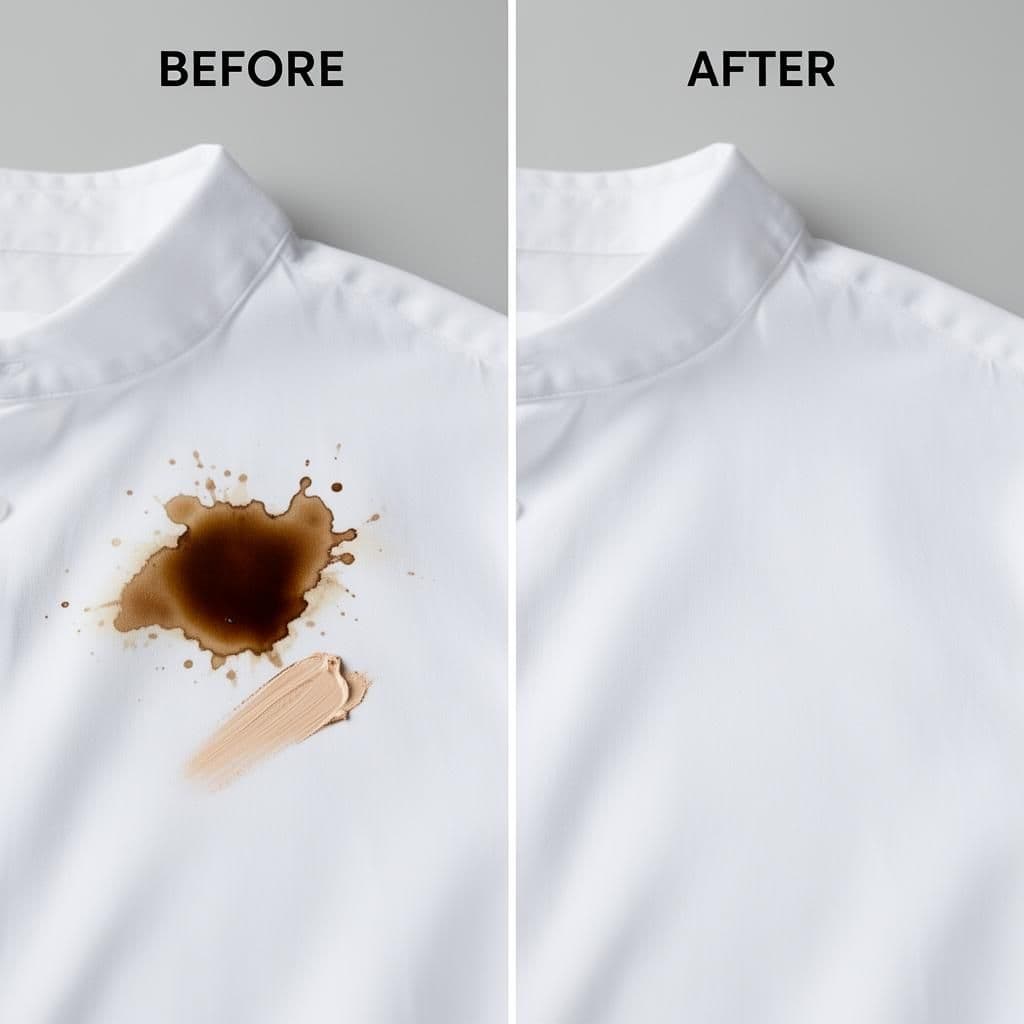
Step by step
- 1
Spray directly
Apply Luniva to the stain until saturated. No rubbing, no pre-soak.
- 2
Wait 1–3 minutes
Active Enzymes break the stain down at the molecular level. Don't let it dry.
- 3
Wash as normal
Machine-wash as normal. Air dry; never tumble dry until you've confirmed the stain is gone.
Coffee combines tannins (a vegetable pigment) with milk protein in lattes and cappuccinos – two very different stains in one. Luniva uses proteases to digest the milk protein and surfactants to lift the tannin, all in 1–3 minutes. No bleach, no soaking.
Why coffee stains brown into fabric
Tannins bond to cellulose fibres in cotton and linen. Add milk protein from a latte and the stain sets even faster – protein coagulates around the tannin and seals it in. Standard detergent only lifts the surface; the brown tannin remains.
Fabric guide
Best on washable everyday fabrics
Cotton, linen, denim, polyester and cotton blends: clothes, kidswear, bedding, towels and washable covers.
Test first on delicates
Patch-test an inconspicuous area on silk, wool, viscose, leather-trimmed items or anything labelled dry-clean only.
Don't let it dry
Spray, leave 1–3 minutes, then wash. Don't let the treated area dry out before washing.
Check before drying
Inspect the area after washing and repeat if any shadow remains. Dryer heat can set a leftover mark.
Coffee & tea: questions
Yes. Spray, wait 1–3 minutes, wash as normal, following the garment care label. Inspect before drying – repeat once if needed.
Yes – milk-based coffee stains are exactly Luniva's specialty: protein + tannin in one go.
Rinse the back of the stain with cold (not hot) water to flush out as much tannin as possible, then spray Luniva directly on the front of the stain. Wait 1–3 minutes for the enzymes and surfactant to break down the tannin and any milk protein, then wash as normal, following the garment care label. Air-dry before tumble-drying.
Yes – even tea stains that have been through a wash and reappeared. Spray Luniva directly on the dried ring, leave for 1–3 minutes, then wash as normal, following the garment care label. For very old stains on white cotton, repeat the pre-treatment a second time before the wash.
Yes – that's where Luniva is most useful. Milk adds casein protein and fat that lock the tannin into the fibre. The protease and lipase in Luniva digest the milk components first, releasing the tannin so the surfactant can flush it out. Sugar dissolves in water and is not the issue.
Detergent doesn't break tannin bonds with cotton. You need active enzyme + surfactant action – that's Luniva.
Based on controlled laboratory testing. Performance may vary by stain type, fabric, age of the stain and wash conditions. Always follow the garment care label and test an inconspicuous area first.