What's making it yellow
Sweat and drool
Organic, body stains. Use Enzyme Powered.
See Enzyme PoweredHair oil, serums and styling products
Oily marks. Use Pro Formula.
See Pro FormulaNight cream, makeup and face oils
Oily marks. Use Pro Formula.
See Pro FormulaGoing to bed with wet hair
Damp pillows stay warm and moist, which can leave water marks and a musty smell. Dry your hair first or use a towel over the pillow.
Pillowcases
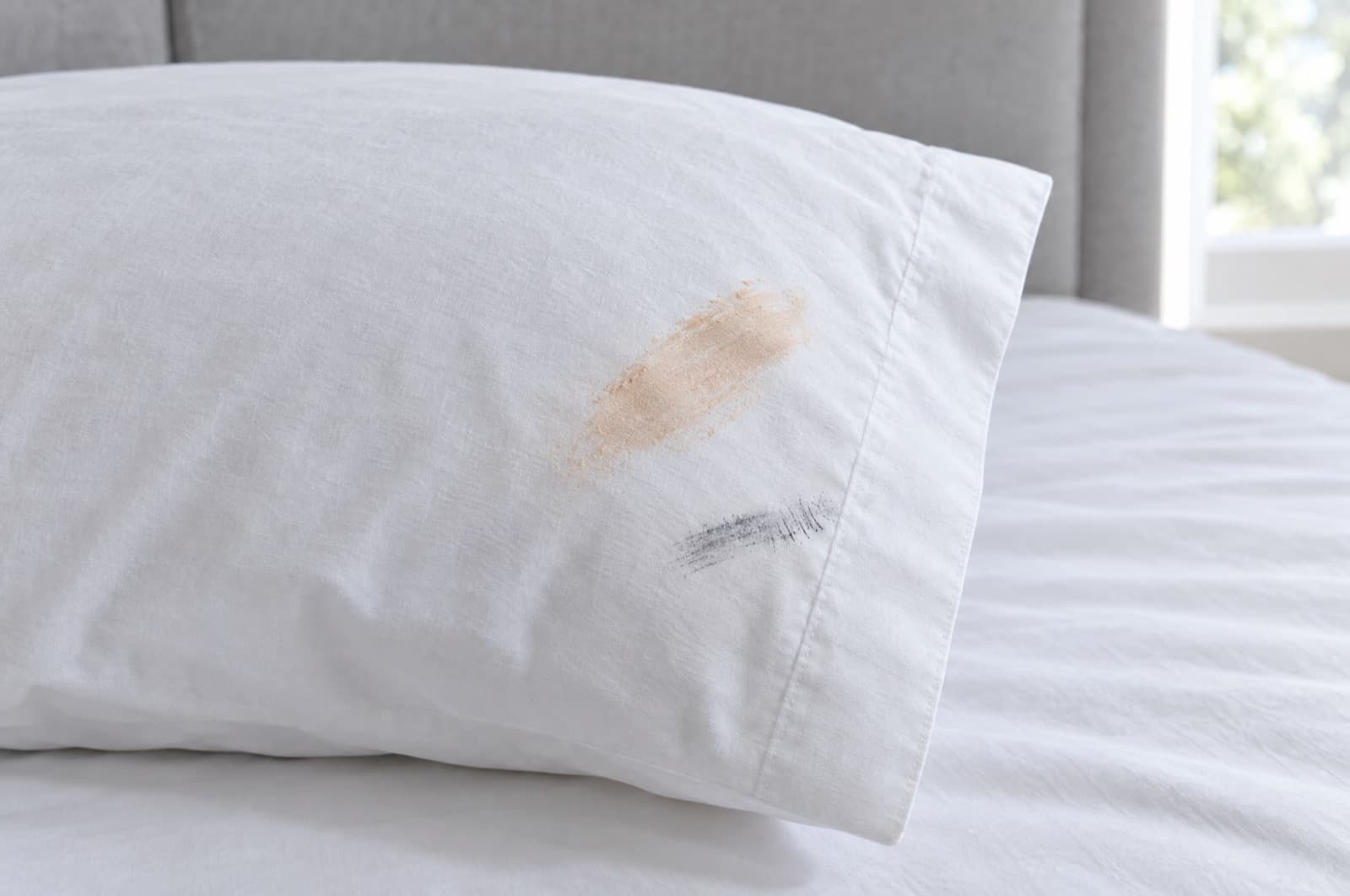
- 1Treat the patchSpray the yellow area with the matching bottle: Enzyme Powered for sweat, Pro Formula for oily patches. Treat them as separate marks.
- 2Wait 1–3 minutesDon't let it dry on the fabric.
- 3Wash, then air-dryWash as the care label says. Check before tumble drying: heat fixes any yellow you missed.
The pillow itself
Read the label: many polyester and some feather pillows are machine-washable, but plenty of foam pillows aren't. Only treat and wash a pillow if its label says it can go in the machine, and make sure it's completely dry inside before you use it again. A washable pillow protector under the pillowcase is the easy way to stop yellow reaching the pillow at all.
Top tips
- Change pillowcases weekly, or more often if you use hair oil or face oils at night.
- Use a pillow protector and wash it every few weeks.
- Air the pillow in the morning before making the bed.
Questions
Mostly sweat, saliva and oils from your hair and skin soaking through the pillowcase. Over time they build up and turn yellow.
Pro Formula isn't for silk. Patch-test Enzyme Powered first, and follow the care label or ask a professional cleaner.
Luniva is for washable fabrics, so use it on pillowcases, protectors and machine-washable pillows only.