
How to remove blood stains
Updated · By the Luniva team
Quick answer
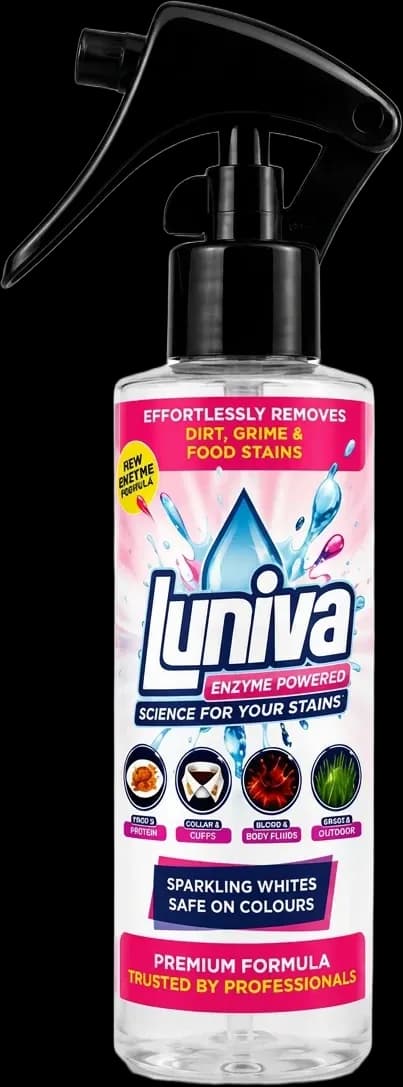
Use Luniva Enzyme Powered (the pink one). Spray it directly onto the stain, leave it for 1–3 minutes, then wash as normal following the garment care label.
Rinse fresh blood in cold water first, never hot: heat sets the stain.
Step by step
- 1
Rinse with cold water
Hold the stained fabric under cold running water from the back of the stain to push blood out, not deeper in. Never use hot water.
- 2
Spray Luniva
Saturate the stain with Luniva. For dried blood, gently work the formula in with your fingers and leave for 1–3 minutes.
- 3
Wash at 30–40°C
Machine-wash at a maximum of 40°C and air dry. Inspect before tumble-drying – heat sets any residue permanently.
Blood is one of the most common – and most permanent – stains in household laundry, and the single biggest reason it sets for good is washing it wrong on the first attempt. Blood is a protein stain: it is held together by haemoglobin and albumin, both of which denature (literally cook) when exposed to heat. A 60°C wash, a tumble dry, or even an iron over a damp blood mark will bond the protein irreversibly to the fibre, which is why so many sheets, school shirts and football kits end up with brown shadows that never come out. The correct sequence is the opposite of instinct: cold water first to flush as much blood as possible, then a protease-rich enzyme treatment like Luniva to digest the protein bonds, then a low-temperature wash. This guide covers fresh blood, dried-in blood, period stains, nosebleeds on bedding, and what to do when a blood-stained garment has already been through the dryer once.
Why blood stains set permanently if you wash them wrong
Blood is protein-based. Heat denatures the proteins and bonds them irreversibly to fabric fibres – which is why a hot wash or tumble-dry will lock a blood stain in for good. The fix is the opposite of intuition: rinse with cold water first, then use a protease-rich active enzyme treatment like Luniva to digest the protein, then wash on a low cycle. The same principle applies to other protein stains – egg, dairy, sweat, gravy – but blood reacts fastest, which is why it deserves its own playbook.
Fabric guide
Best on washable everyday fabrics
Cotton, linen, denim, polyester and cotton blends: clothes, kidswear, bedding, towels and washable covers.
Test first on delicates
Patch-test an inconspicuous area on silk, wool, viscose, leather-trimmed items or anything labelled dry-clean only.
Don't let it dry
Spray, leave 1–3 minutes, then wash. Don't let the treated area dry out before washing.
Check before drying
Inspect the area after washing and repeat if any shadow remains. Dryer heat can set a leftover mark.
Blood: questions
Yes. For dried blood, saturate the stain with Luniva and let it sit for 1–3 minutes so the protease active enzymes can break down the bonded proteins. Wash cool, as normal, following the garment care label. Repeat once if traces remain – and never tumble-dry between applications.
30–40°C maximum. Anything hotter cooks the protein into the fabric and sets the stain permanently. Cold-water rinses before treatment are ideal.
Yes – and without bleach. Spray Luniva, leave for 1–3 minutes on whites for stronger lifting, then wash as normal, following the garment care label. The active enzyme formula targets the protein causing the stain, not the fabric, so whites stay bright without fibre damage.
Yes. Luniva is colour-safe and bleach-free. For silk, wool or other delicates, spot-test on a hidden seam first, then apply, wait 1–3 minutes, and hand-wash in cool water.
Yes. For mattress pads, sheets and pillowcases, blot with cold water first, spray Luniva, leave 1–3 minutes, then either wash as normal, following the garment care label, or blot the area with a clean damp cloth for spot treatment.
Based on controlled laboratory testing. Performance may vary by stain type, fabric, age of the stain and wash conditions. Always follow the garment care label and test an inconspicuous area first.